Party creation
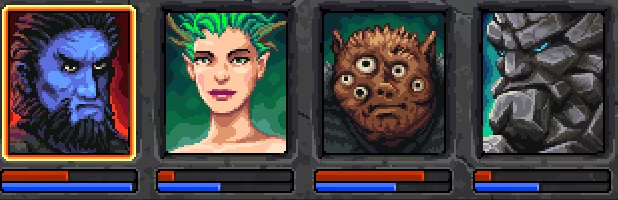
You take four heroes into Underkeep, and for each one you pick a race, class, name and portrait. If you want to start playing straight away, use the quick party. If you build your own, you decide who takes the two front spots and who stands at the back.
Start with the formation
A hero in the back row needs something to fight with from back there: a ranged weapon, a spell or a weapon with Reach. Give all four of them ordinary short melee weapons and the two at the back won't reach the enemy in the default formation.
| Position | Possible job | What to check |
|---|---|---|
| Front left | Melee damage and taking hits | Health, armour, weapon requirements and an active skill the hero can actually use. |
| Front right | A second melee fighter, protection or support | Whether the hero can survive while helping the other front-row hero. |
| Rear left | Ranged weapon damage or offensive magic | The attack's real range and which resource the skills use. |
| Rear right | Healing, control, extra damage or support | What the fourth hero adds that the other three don't cover. |
The table is only a planning aid. No class is locked to a particular spot.
A community guide describes changing a hero's row by dragging their portrait. You can adjust your formation during the game, though swapping rows in combat costs that hero an action; see Combat.
Example: Warrior, Paladin, Ranger and Wizard
One way to start: Warrior and Paladin up front, Ranger and Wizard behind. That gives you two fighters in the front row, a ranged attacker and a caster with attack spells. The Paladin can learn the healing skill Lay on Hands, but while your party is still starting out, that's no reason to skimp on food and potions.
If you want a back-row hero mainly for healing and support, take a Voidcaller. Put one in place of the Wizard and you get less direct spell damage and more healing. Replace the Ranger instead and you'll have two heroes paying with Mana, so pack your supplies for that.
Race adds its own rules
A Human gets extra experience, and a Dwarf has infravision plus a bonus to elemental resistance. A Stoneborn can't wear body armour and gains Armor as it levels up instead. A Raven gets random mutations, one helpful and one harmful. An Elk is better protected against animals, and a Slugman is immune to critical hits but takes double damage from fire.
With a Raven, read which pair of mutations you actually got before you commit. With a Stoneborn, plan for no body armour at all. High Strength won't change that, even if you give it a class that usually wears armour.
Attributes are rolled
There are four main attributes: Strength, Dexterity, Wisdom and Endurance. You don't hand out the points yourself – the game rolls the starting values. When you look at another roll, compare the whole character: a higher main attribute can come with lower Endurance.
Gear can also ask for a secondary attribute. The Short Sword needs Strength before you can equip it, but its attack runs on Dexterity. Some caster gear needs Wisdom even for a class whose main attribute isn't Wisdom. So when you compare rolls, think about the gear you'll want to use later as well.
Before you confirm your party
Check what each class pays for its skills with: Stamina, Mana, Zeal, bones or its own health. That tells you what supplies to carry. And for the first active skill you want to use, check which weapon it needs.