Character progression
Each level gives a hero one skill point. You spend it on a class skill – you can't put it into an attribute like STR or DEX. If a new weapon needs more STR, skill points won't get you there.
A skill has up to five ranks. A higher rank, or a whole new skill, can also require the hero to reach a certain level first. So spare points don't mean you can buy everything you see in the list.
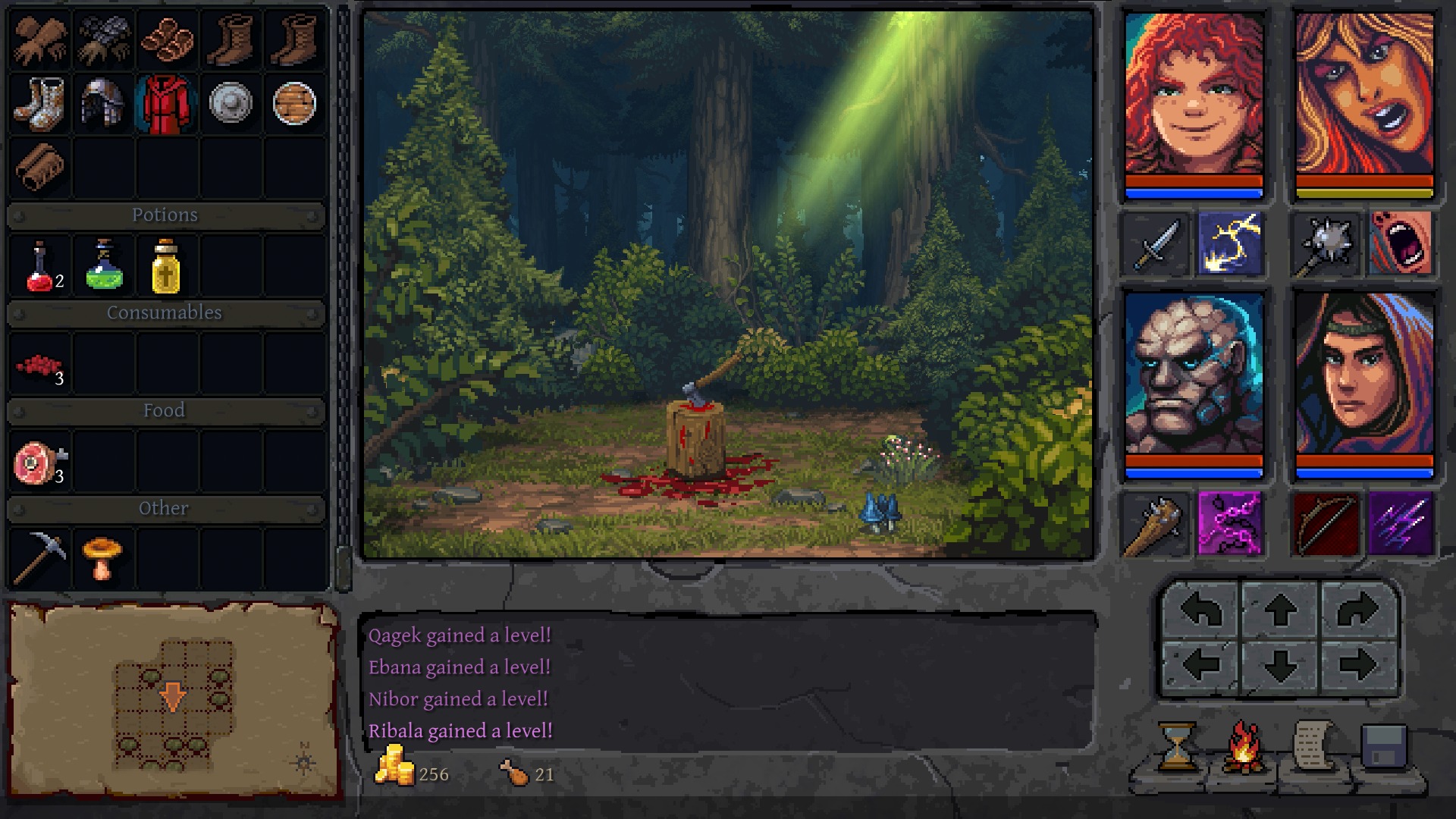
Active and passive skills
Your active skill sits in the slot next to the basic attack. Right-click that slot to swap in another active skill the hero has already learned. Passive skills work on their own, so you don't put them in the slot. When you swap, check the weapon requirement: a learned skill might not work with what the hero is holding right now.
Some skills that unlock at level 6
| Class | Skill |
|---|---|
| Wizard | Fireball, Ice Tower, Storm Chain |
| Ranger | Execution Shot |
| Thief | Shadow Lunge |
| Blood Mage | Bloodfall |
| Paladin | Judgment |
What the next rank gets you
Before you spend a point, read what the next rank actually does, what it costs and what restrictions come with it. A stronger active skill can eat more of the class resource. And a rank that adds a cure for a condition can change a hero's role more than a bit of extra damage.
Void Mend, a Voidcaller spell, shows this well. Its higher ranks add cures for Bleed, Burn, Poison and Stun, each at a different rank. If one of those keeps coming back in your fights, buy the rank that cures it.
Skills and weapons
Some skills need a particular weapon type or another piece of gear. If you've put points into an attack like that and then find a different weapon, weigh what you gain against what stops working. Watch for the same thing when you shuffle the party: a hero moved to the back row can't reach with every attack, and a two-handed weapon takes up the second hand too.
Where to put your points
Look at the fights you've already had. Each problem points to different skills:
- Your front row takes more damage than you can heal – look at protection and healing.
- Enemies live long enough to use a nasty ability – you're short on damage or control.
- You have plenty of damage but nothing against harmful conditions – look for a skill that cures them.
The developers give an example party: the Warrior puts points into a skill that draws enemies' attention, the Paladin into protection or healing, the Ranger into an attack or a target mark, and the Wizard into a spell cast from the back row. You don't have to copy it. Pick whatever your own party is missing.
Resources and unlock levels
A Mana skill only helps while the hero has the Mana to pay for it. The other classes run on Stamina or Zeal, and the Blood Mage on bones or their own health. So think about what an upgrade does over several rounds and over the whole stretch between two safe rests. One perfect cast doesn't tell you much.
Before you build your plan around a skill that unlocks late, check which level you can buy it at. Until then the hero has to fight with what they've got: a weapon they can equip, an attack that reaches from their row, and skills they can afford.